A new analysis based on satellite imagery has revealed that Iran’s military response during its recent conflict with the United States may have caused significantly more destruction than initially acknowledged. Reports based on high-resolution satellite images suggest that Iranian missile and drone attacks damaged or destroyed more than 200 structures and military assets across several American bases in the Gulf region.
The findings have sparked intense debate in global defense and political circles because earlier statements from the administration of Donald Trump had reportedly downplayed the extent of the damage. However, the latest assessment indicates that multiple strategic military installations suffered serious operational setbacks during the month-long confrontation.
According to the analysis, around 228 structures and pieces of equipment were reportedly hit across 15 US military facilities located in countries such as Bahrain, Kuwait, Qatar, Jordan, Saudi Arabia, and the United Arab Emirates. The damaged assets allegedly included aircraft hangars, barracks, radar systems, communication centers, air defense units, fuel storage depots, and command facilities.
One of the hardest-hit locations was reportedly the headquarters of the US Fifth Fleet in Bahrain. Several important bases in Kuwait, including Camp Arifjan and Ali Al-Salem Air Base, were also said to have suffered major destruction. Analysts claim that advanced Patriot missile systems, fuel sites, and even power infrastructure were damaged during the strikes.
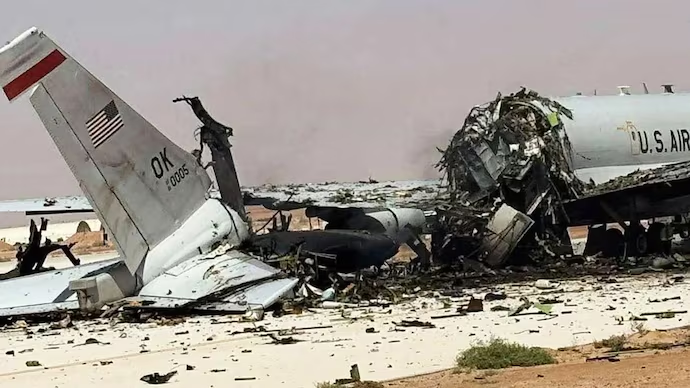
Satellite communication systems at the Al Udeid Air Base in Qatar and advanced THAAD radar systems in Jordan and the UAE were also reportedly destroyed. In Saudi Arabia, reports claimed that a major surveillance aircraft and a refueling tanker aircraft were lost during the attacks.
The conflict also reportedly led to the destruction of several high-value American drones and fighter aircraft. These allegedly included MQ-9 Reaper drones, MQ-4C Triton surveillance drones, F-15 Strike Eagles, and an A-10 Warthog aircraft. Iranian sources even claimed that an F-35 stealth fighter suffered combat damage, though this remains unconfirmed officially.
Military experts studying the satellite images noted that the strikes appeared highly accurate, suggesting Iran used precision-guided missiles and drones effectively. Analysts pointed out that many attacks directly targeted military infrastructure rather than randomly hitting surrounding areas. Some experts believe Iran intentionally focused on weakening command systems, communications, and defense networks to disrupt US military operations in the Gulf.
At the same time, some American defense experts argued that certain facilities may have been partially evacuated before the attacks occurred. Others suggested that US forces may have chosen not to intercept every incoming projectile if the target was considered non-essential, in order to conserve expensive air defense missiles.
Reports also indicate that the financial impact of the conflict could be far greater than earlier estimates. Initial Pentagon calculations reportedly placed the war cost at around $25 billion, but several analysts and lawmakers now believe the total economic damage could eventually rise between $40 billion and $50 billion, with some estimates going even higher.
The revelations have intensified political debate in the United States, especially among opposition leaders questioning whether the public was fully informed about the actual scale of damage suffered during the conflict. The incident has also highlighted the growing capabilities of Iran’s missile and drone programs despite years of sanctions and military pressure.
As global tensions continue in the Middle East, the findings have once again raised concerns about the vulnerability of military installations in the region and the increasing risks of modern warfare driven by precision missile technology.