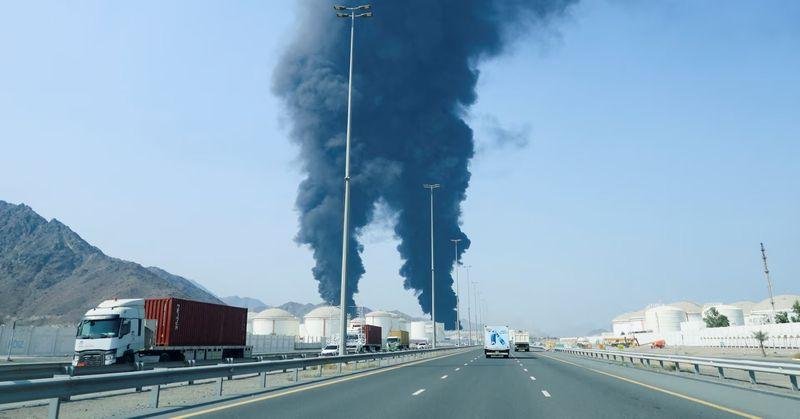
India has strongly condemned the recent attack on a major port facility in the United Arab Emirates, where three Indian nationals were injured. The strike targeted the Fujairah Petroleum Industries Zone, a key oil and logistics hub in the United Arab Emirates, escalating tensions in an already volatile region.
Reacting to the incident, the Indian government described the attack as “unacceptable,” emphasizing the need to protect civilian lives and infrastructure. The statement reflects growing concern in New Delhi over the safety of Indian citizens abroad, especially in conflict-prone regions like the Middle East. The condemnation comes amid rising hostilities involving Iran and its geopolitical rivals, with fears that the situation could spiral further if not controlled.
According to officials, the attack marks a significant escalation, as it is reportedly one of the first direct strikes by Iran on the UAE since a fragile ceasefire was established earlier. The targeted facility plays a crucial role in global oil supply chains, making the attack not only a regional concern but also an issue with international economic implications.
India’s Ministry of External Affairs, through spokesperson Randhir Jaiswal, called for an immediate halt to hostilities. He stressed that targeting civilian infrastructure and innocent people is completely unacceptable and urged all sides to exercise restraint. The statement also reaffirmed India’s long-standing position—that dialogue and diplomacy remain the only sustainable path to resolving conflicts.
The incident has once again highlighted the vulnerability of expatriate communities. Millions of Indians live and work in the Gulf region, contributing significantly to both local economies and India’s remittance inflows. Any escalation in conflict raises serious concerns about their safety and well-being. The injury of three Indian nationals in this attack underscores the real human cost of geopolitical tensions.
Experts believe that the situation is closely tied to broader tensions involving the United States and Iran, which have seen periodic escalations over strategic, military, and nuclear-related issues. The UAE, being a close ally of the United States, often finds itself caught in the crossfire of these rivalries. This latest attack could further strain relations and potentially trigger retaliatory actions, increasing instability across the region.
India, which maintains strong diplomatic ties with both Gulf countries and Iran, finds itself in a delicate position. While condemning violence, it must also balance its strategic and economic interests. New Delhi’s response reflects this careful approach—firm in its opposition to violence, yet focused on promoting peace through dialogue.
The broader concern now is whether this incident will derail ongoing efforts to stabilize the region. With global energy markets closely watching developments, any prolonged conflict could have far-reaching consequences beyond the Middle East. India’s strong reaction signals its commitment to protecting its citizens and supporting peace. As tensions rise, the call for diplomacy becomes even more urgent. The world now watches closely, hoping that restraint and negotiation will prevail over further conflict.