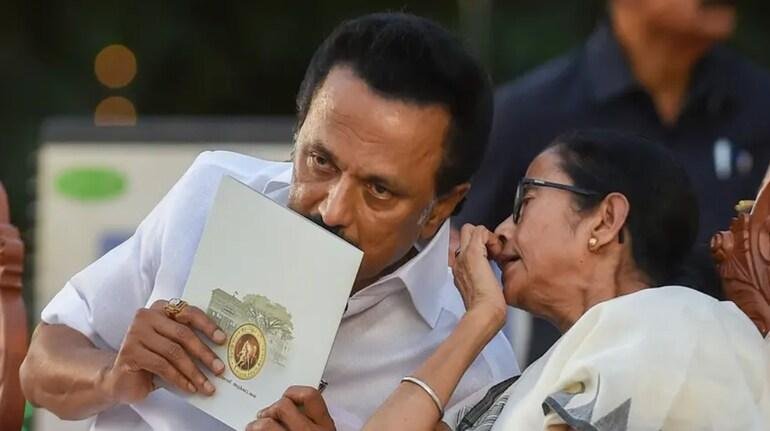
In a dramatic turn of events that has reshaped India’s political landscape, two of the strongest regional leaders—Mamata Banerjee and M. K. Stalin—have suffered major defeats in their own strongholds. For years, both leaders were seen as powerful barriers against the expansion of the Bharatiya Janata Party, but the 2026 elections have delivered a shocking reality check.
In West Bengal, Mamata Banerjee’s Trinamool Congress, which had dominated the state for over a decade, was finally overwhelmed by the BJP’s aggressive and highly organized campaign. Despite her strong political presence and past victories, the BJP steadily grew its influence over the years, and this time it translated into a decisive win. Mamata reacted strongly to the results, questioning the fairness of the election process and alleging irregularities. However, beyond the immediate reaction, the bigger challenge for her lies ahead—rebuilding her party, maintaining unity, and redefining her role without the power of governance.
Mamata Banerjee has always been known as a fighter, someone who thrives in adversity. She is likely to shift her strategy and reconnect with voters by strengthening her regional identity narrative. Internally, her party may undergo serious introspection, including reviewing campaign strategies, leadership decisions, and governance issues. The key question now is whether she can remain an effective opposition leader without the administrative backing she once had.
Meanwhile, in Tamil Nadu, the defeat of MK Stalin came as a bigger surprise. His party, the Dravida Munnetra Kazhagam, had shown no visible signs of decline in recent years. However, the sudden political entry and rise of actor Vijay changed everything. His party, Tamilaga Vettri Kazhagam, captured the imagination of voters with a mix of fresh energy, youth appeal, and a promise of change.
Unlike Mamata’s gradual electoral pressure, Stalin’s defeat was swift and unexpected. Vijay’s popularity, combined with Tamil Nadu’s long-standing connection between cinema and politics, created a powerful wave that the DMK struggled to counter. This marks a significant shift in the state’s political dynamics, breaking the traditional dominance of established parties.
Despite the setback, Stalin is not stepping away. He is expected to reposition himself as a guardian of Dravidian ideology, which remains central to Tamil identity and politics. However, his challenge is unique—he now faces a completely new kind of opponent, one who lacks political experience but possesses immense public support and charisma.
These twin defeats signal a broader transformation in Indian politics. The BJP continues to expand its footprint, especially in eastern India, while Tamil Nadu enters a new era with the emergence of a fresh political force. The elections highlight how quickly political fortunes can change, with long-standing leaders facing unexpected challenges from both established parties and new entrants.
However, this is not necessarily the end for Mamata Banerjee and MK Stalin. Both leaders have made it clear that they will continue to fight and adapt. Their political journeys are entering a new phase—one that will test their resilience, strategy, and ability to connect with a changing electorate. this moment is less about defeat and more about transformation. Indian politics is evolving rapidly, and while old strongholds may fall, new opportunities for comeback always remain.