
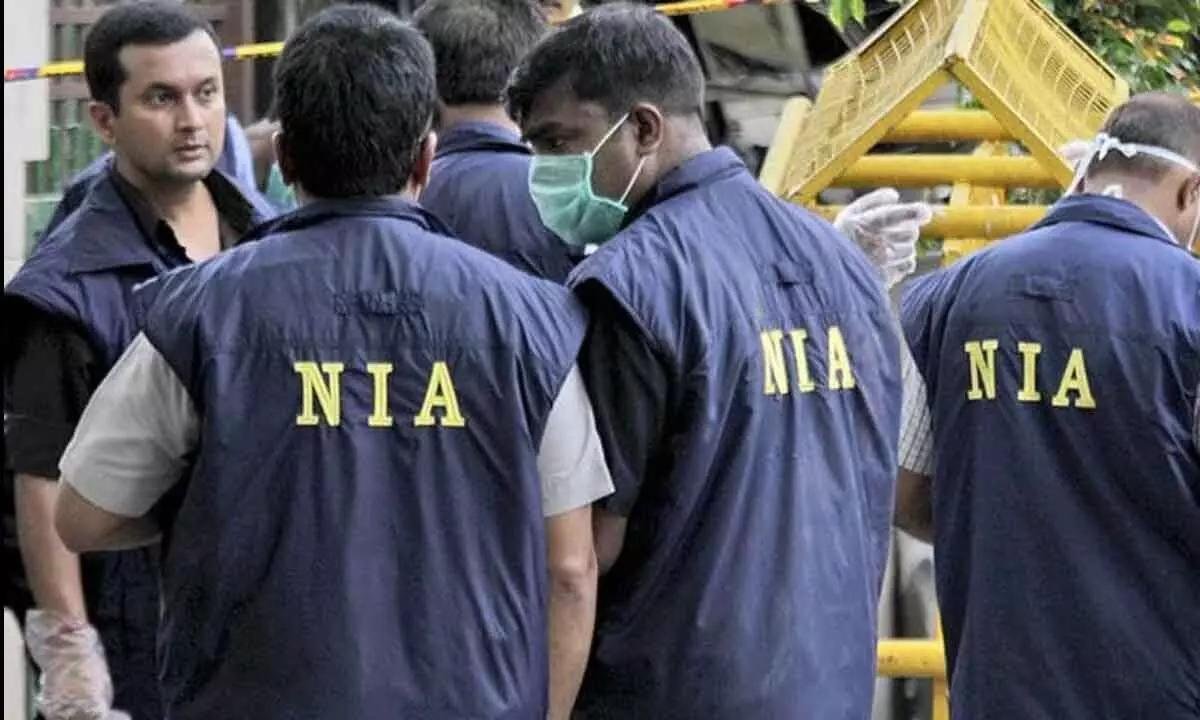
A major espionage case has come to light after the National Investigation Agency (NIA) arrested a Kolkata resident accused of allegedly sharing sensitive information with individuals linked to Pakistan’s intelligence network. The arrest is being viewed as a significant development in an ongoing investigation into suspected anti-India espionage and security-related activities.
According to the NIA, the accused, identified as Zafar Riaz, also known as Rizvi, was allegedly involved in passing confidential and security-related information to Pakistani Intelligence Officers (PIOs). Investigators believe his activities were part of a larger conspiracy that could have implications for national security.
The agency stated that a Look Out Circular (LOC) had already been issued against the accused before his arrest. Authorities were also reportedly pursuing legal procedures to declare him a Proclaimed Offender due to his alleged involvement in the case and his failure to cooperate with investigative proceedings.
Zafar Riaz has been booked under multiple legal provisions, including sections of the Bharatiya Nyaya Sanhita (BNS), the Official Secrets Act, and the Unlawful Activities (Prevention) Act (UAPA). These laws deal with offenses related to national security, unlawful activities, and the protection of classified information.
Investigators revealed that the accused had been traveling frequently between India and Pakistan for nearly two decades. During one of these visits, he was allegedly approached by Pakistani intelligence handlers and recruited to carry out espionage-related activities. Authorities claim that financial incentives and promises of Pakistani citizenship were used to influence and recruit him.
The NIA further alleged that the accused played a role in facilitating communication networks used by intelligence operatives. According to investigators, he provided One-Time Passwords (OTPs) linked to Indian mobile numbers, allowing certain communication applications to be activated and used secretly.
Officials believe these communication channels were later utilized by other individuals involved in the espionage network. One such accused, identified in the investigation, was allegedly in contact with Pakistani intelligence officials and is suspected of sharing sensitive information related to security matters.
A notable aspect of the case is that the accused reportedly has personal ties to Pakistan. According to investigators, he is married to a Pakistani national, and his children hold Pakistani citizenship. However, authorities have clarified that the investigation is focused on alleged espionage activities and not on family relationships.
The NIA also noted that this was not the first time the accused had faced legal action in connection with national security matters. He had previously been convicted in an espionage-related case under earlier criminal laws and provisions of the Official Secrets Act. This background has become an important factor in the current investigation.
Officials are now working to identify additional individuals who may have been connected to the network. The investigation aims to uncover the full extent of the alleged espionage operation, including its communication channels, financial links, and possible international connections.
Security experts say cases like these highlight the challenges faced by intelligence and law enforcement agencies in preventing information leaks and monitoring cross-border espionage activities. With technology playing a larger role in communication and information exchange, authorities are increasingly focused on identifying covert networks that could pose risks to national security.
The NIA has stated that the investigation remains active and that further arrests or developments may follow as evidence is examined and additional leads are pursued.