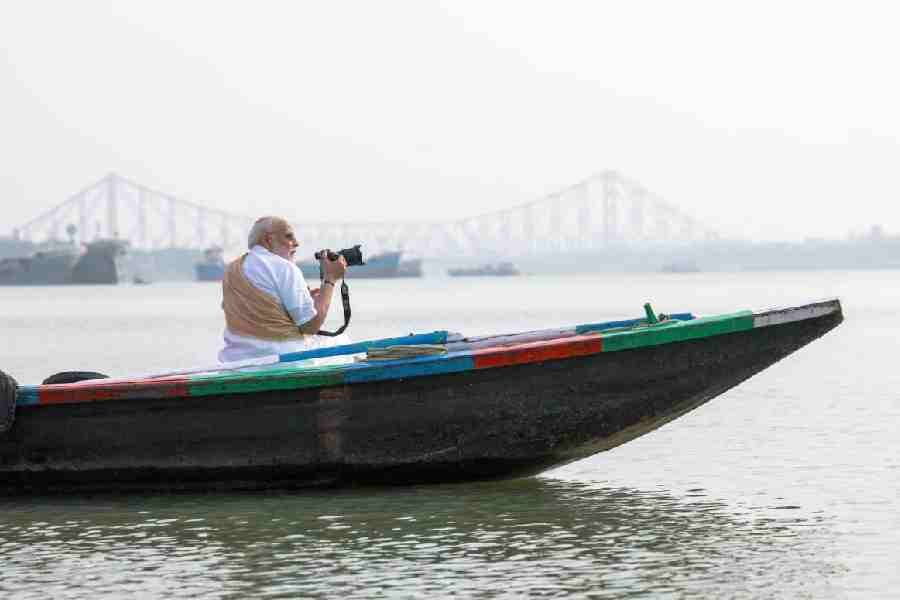
Prime Minister Narendra Modi began his day in Kolkata with a serene and symbolic boat ride on the Hooghly River, blending political outreach with cultural connection. The visit comes at a crucial time, as election campaigning intensifies in West Bengal ahead of the next phase of Assembly polls.
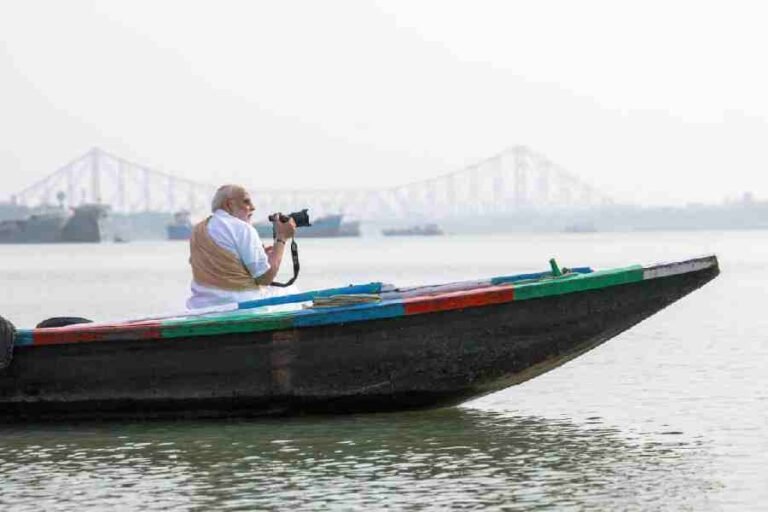
During the early morning hours, Modi headed to the iconic Princep Ghat, where he boarded a traditional wooden boat. As he cruised along the Hooghly, the Prime Minister was seen enjoying the calm surroundings while also capturing moments with a camera. The visuals shared later on social media showed him photographing the scenic beauty of the river, with landmarks like the Howrah Bridge and Vidyasagar Setu clearly visible in the background.
Taking to social media platform X, Modi expressed his admiration for the river and its deep cultural significance. He described the Hooghly, a distributary of the Ganga, as more than just a water body calling it a symbol of India’s rich civilisation and spiritual heritage. According to him, the river reflects the soul of Bengal, carrying centuries of history, tradition, and faith within its flow.
The Prime Minister also highlighted the emotional and cultural connection that the people of Bengal share with the Ganga. He mentioned that for Bengalis, the river is not just a geographical feature but an integral part of their identity. By spending time on its banks and waters, Modi said he was expressing gratitude to “Maa Ganga” and acknowledging its importance in shaping the region’s legacy.
Apart from enjoying the natural beauty, Modi interacted with local boatmen and morning walkers during his visit. He praised the hardworking nature of the boatmen, noting their dedication and resilience. These interactions added a human touch to his visit, reflecting an attempt to connect directly with local communities.
This river visit came a day after a major roadshow led by the Prime Minister, which stretched from Howrah to Kolkata. Interestingly, he pointed out that while he had crossed the Howrah Bridge during the roadshow, the boat ride gave him a completely different perspective of the same iconic structure. Viewing the bridge from the river, he said, offered a unique and memorable experience.
Beyond the symbolic and cultural aspects, Modi used the occasion to reiterate his political message. He emphasized his government’s commitment to the development of West Bengal and the welfare of its people. Referring to Bengalis as a “great community,” he assured that efforts would continue to ensure economic growth, infrastructure development, and overall prosperity in the state.
The timing of the visit is significant, as the state is in the middle of Assembly elections. With the first phase already completed, the second phase is scheduled soon, followed by vote counting in early May. Modi has been actively campaigning for the Bharatiya Janata Party, making multiple visits and addressing rallies across the state.
In conclusion, the Prime Minister’s boat ride on the Hooghly River was not just a peaceful morning activity it carried layers of cultural symbolism, political messaging, and public engagement. By blending tradition with modern outreach, the visit aimed to strengthen emotional connections with the people of Bengal while reinforcing commitments to their future development.