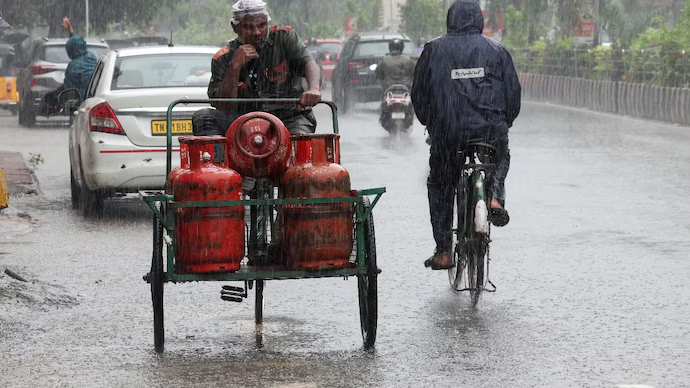
India is expected to experience a mix of weather conditions in May, with higher-than-usual rainfall and varying temperature patterns across different regions, according to the India Meteorological Department (IMD). The department has forecast that rainfall across the country is likely to be above normal, exceeding 110% of the long-period average (LPA).
This prediction suggests that several parts of the country could receive more rain than typically expected during this time of year. Such conditions may bring relief from intense summer heat in many regions, although weather variations are still expected across different zones.
The IMD has stated that daytime temperatures, or maximum temperatures, are likely to remain normal or even below normal in large parts of India. This could help reduce the impact of extreme heat, which usually affects the country during May. However, certain areas—including parts of southern peninsular India, the northeast, and northwest India—may still witness above-normal daytime temperatures.
In contrast, night temperatures are expected to be higher than usual across most regions. Warmer nights can contribute to discomfort and may also impact agricultural activities. However, some parts of northwest and central India, along with nearby regions in the peninsula and northeast, might still experience normal or slightly cooler night temperatures.
Despite the generally moderate temperature outlook, the IMD has warned of an increase in heatwave days in specific regions. Areas along the Himalayan foothills, sections of the eastern coastline, and states like Gujarat and Maharashtra could face short periods of intense heat. These localized heatwaves may still pose risks to public health and agriculture.
Rainfall distribution is expected to be favourable across much of the country, with many regions receiving normal to above-normal precipitation. However, some parts of eastern, northeastern, and east-central India may receive below-normal rainfall, indicating uneven distribution.
The current weather outlook is influenced by global climate patterns. The IMD has noted that neutral conditions in the Pacific Ocean are gradually shifting towards El Nino, which could develop during the upcoming southwest monsoon season. At the same time, neutral conditions are currently present in the Indian Ocean Dipole, with the possibility of a positive phase emerging later in the monsoon period. These climatic factors play a crucial role in determining rainfall and temperature trends in India.
From an agricultural perspective, the forecast carries both advantages and challenges. Lower daytime temperatures in several regions may support the harvesting of late rabi crops, providing some relief to farmers. However, warmer nights and occasional heat stress could negatively impact crop growth during sensitive stages.
Additionally, increased rainfall is expected to improve soil moisture, which will benefit preparations for the upcoming kharif season. At the same time, excessive rainfall in certain areas could lead to waterlogging, disrupt harvesting activities, and increase the risk of crop diseases, including fungal infections. the IMD’s forecast points to a dynamic weather pattern for May, combining beneficial rainfall with localized challenges. Authorities and farmers alike will need to stay prepared for changing conditions in the weeks ahead.