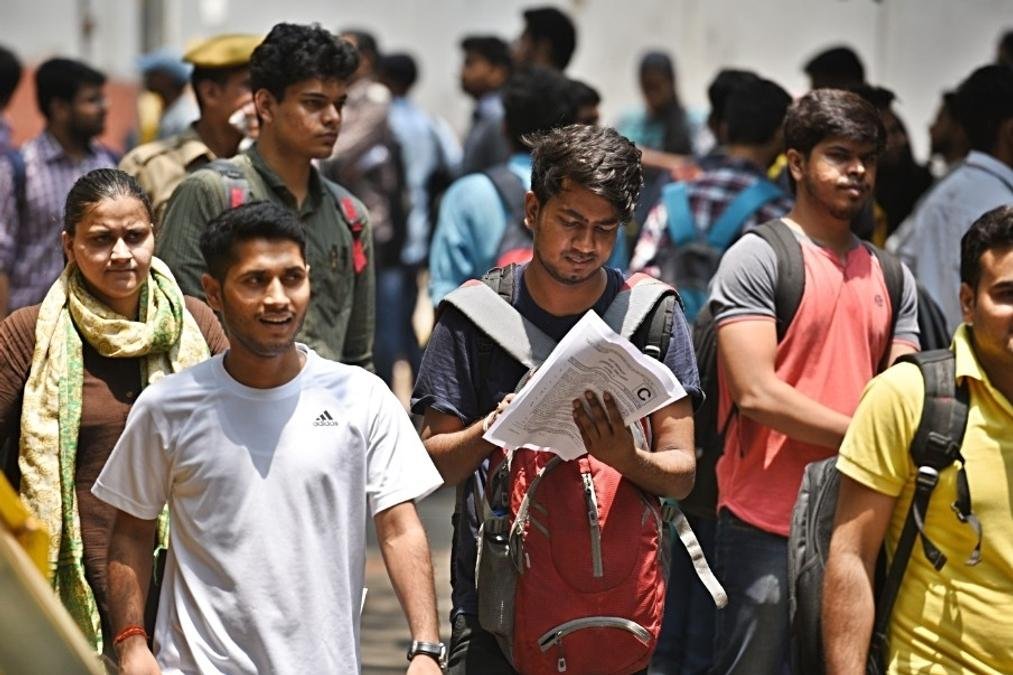
The UPSC Civil Services Preliminary Examination 2026 has sparked an intense debate among aspirants, educators, and even serving bureaucrats, with many describing the General Studies (GS) Paper 1 as one of the toughest and most unpredictable papers in the history of the examination. Soon after the exam concluded on May 24, social media platforms were flooded with reactions from candidates who struggled to process the paper’s unusual format and complexity.
More than eight lakh candidates appeared for the preliminary stage of India’s prestigious Civil Services Examination, which serves as the gateway to careers in the IAS, IPS, IFS, and other central services. However, this year’s exam left many aspirants questioning not only their preparation strategies but also the future direction of the UPSC examination pattern.
Several candidates reported that the biggest challenge was not simply the difficulty of the questions but the sheer amount of reading required. Many questions were considerably longer than in previous years, forcing aspirants to spend more time understanding the question itself before attempting an answer. With 100 questions to be completed in just 120 minutes, candidates effectively had only a little over one minute per question, making time management a major hurdle.
Educational experts noted that previous UPSC papers typically consisted of around 40 pages, while this year’s GS Paper 1 reportedly stretched to nearly 56 pages. The increase in content meant candidates spent valuable minutes reading lengthy statements and interconnected facts. As a result, many were unable to attempt all questions despite being familiar with the topics being tested.
UPSC mentors across the country highlighted that the examination seemed to focus heavily on analytical thinking rather than straightforward factual recall. Questions often required candidates to connect multiple statements, identify relationships between concepts, and evaluate complex scenarios under strict time pressure. This shift, according to experts, made the paper appear more unpredictable than traditionally difficult.
The exam’s unpredictability became a major talking point among aspirants. Many felt that even extensive preparation could not fully prepare them for the style of questioning seen this year. Some candidates described the experience as mentally exhausting, while others questioned whether the examination was moving beyond its officially prescribed syllabus.
Concerns were also raised regarding certain questions that appeared to touch upon subjects generally associated with the Civil Services Mains examination, such as ethics and integrity. Aspirants argued that while the UPSC may classify such questions under broader topics like polity or governance, the distinction was not always clear from a candidate’s perspective.
The debate has extended beyond students. Several educators suggested that a competitive examination should assess depth of understanding within a clearly defined syllabus rather than relying heavily on surprise elements. Critics argued that excessive unpredictability may disadvantage even well-prepared candidates by shifting the focus from knowledge to guesswork and interpretation.
At the same time, others defended the UPSC’s approach, pointing out that the Civil Services Examination has always been known for testing adaptability, critical thinking, and decision-making under pressure. They argued that future administrators are expected to process large amounts of information quickly, making such challenges relevant to the nature of public service.
Adding another new dimension, UPSC announced that it would introduce a provisional answer key mechanism after the preliminary examination, allowing candidates to submit objections before the final key is released. This move has been welcomed by many aspirants seeking greater transparency.
For now, candidates continue to analyze their performance while waiting for official answers and cut-off estimates. Whether UPSC Prelims 2026 will ultimately be remembered as the toughest exam ever remains open to debate, but it has undoubtedly become one of the most discussed preliminary examinations in recent years.