Nine government Industrial Training Institutes in Surat and Visakhapatnam are covered by approved investments of about ₹440 crore under PM-SETU, following shareholders’ agreements involving the Centre, the two state governments and ArcelorMittal Nippon Steel India.
The Skill Development Ministry announced the agreements on October 12. Five ITIs belong to the Surat cluster and four to the Visakhapatnam cluster. The investment split is approximately ₹240 crore for Surat and ₹200 crore for Visakhapatnam.
An industry-led operating framework
Dedicated special purpose vehicles are to manage the clusters. AM/NS India will hold 51% equity, while the Centre and the respective state government will each hold 24.5%. The agreements establish a governance framework; they do not mean that every workshop has already been modernised.
The ministry lists new equipment, updated trades, instructor development and practical training among the planned interventions. NAMTECH will serve as the industry partner’s academic and technical collaborator. PM-SETU’s broader objective is to connect vocational education more closely with industry requirements.
What the change means for students
For students in Andhra Pradesh, the question is how the Visakhapatnam investment translates into usable training. Equipment procurement is only one part of that process. Instructors need preparation, students need sufficient workshop time, and course content needs to match the roles employers actually recruit for.
An industry partnership can provide useful exposure to manufacturing practices. Its value should still be demonstrated through training quality and employment outcomes. An approved investment cannot be treated as a guarantee of a job for every trainee.
The accountability questions
Indian Political Hub’s assessment is that the partnership should be judged through a clear set of delivery measures: when facilities become available, which courses change, how many trainees complete them and what happens after graduation.
Placement reporting would be more informative if it shows the type of work, wages, location and retention, rather than only the number of offers. Public institutes also serve learners with different educational and financial backgrounds, making accessibility a significant part of the reform.
The immediate development is the agreement and approved investment. Prospective students should use official institute notices for admissions and course availability, instead of assuming that newly proposed trades are already open.
Source: Official government release, October 12, 2026.
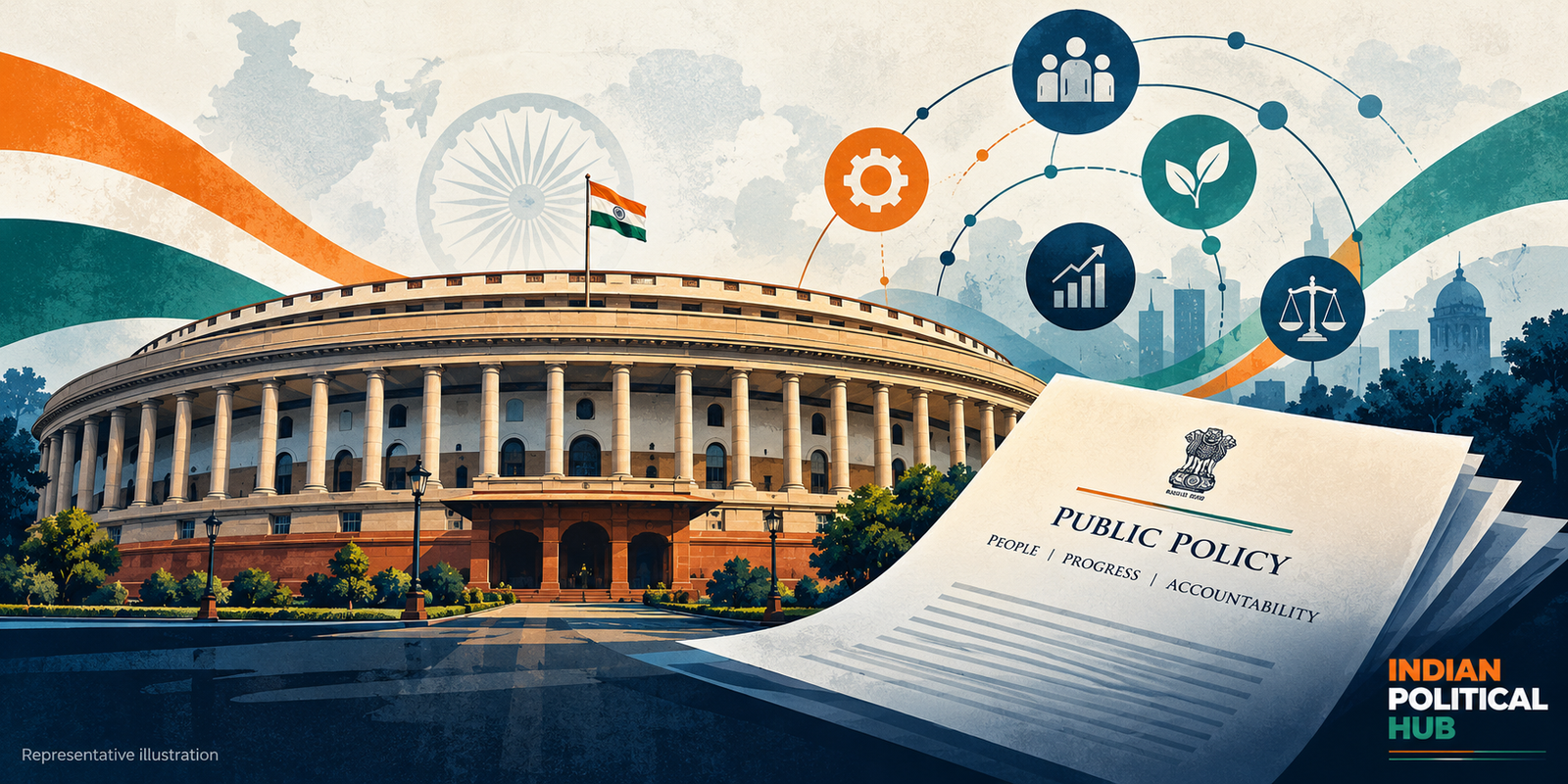
Featured image: representative illustration.